A flawed IRS with FADEC may have led to flight AI 171 crash

On 12th June’ 25, the Indian airspace was jolted by a catastrophe involving London bound Air India flight AI 171, which crashed shortly after taking off from Ahmedabad, claiming the 274 lives. The tragedy involved Boeing’s 787 Dreamliner, which has not seen a single fatal accident since its first commercial service in 2011. However, the aircraft has faced several controversies including safety issues, manufacturing lapses and faulty parts. The AI-171 crash has once again raised questions about Boeing and safety concerns about its Dreamliner.
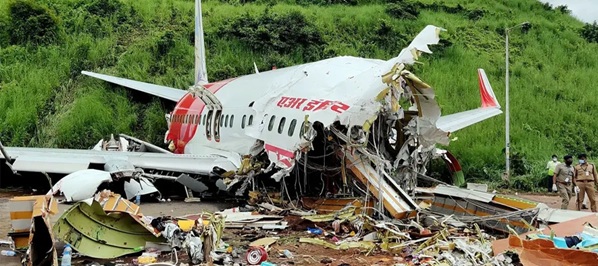
The Aircraft Accident Investigation Bureau (AAIB), the designated authority for air crash investigations in India, promptly initiated an investigation by constituting a multi-disciplinary team including members from National Transportation Safety Board (NTSB), USA. The flight data from the recovered Flight Data Recorder (FDR) and Cockpit Voice Recorder (CVR) is being examined at AAIB Lab in New Delhi. The investigation team is supposed to submit its final report on the crash finding in about two months.
Pending the final investigation report, the aviation experts across the globe are attributing the crash, a result of loss of both engines thrust as Pilots of the flight AI 171 has issued a “Mayday” call and indicated “no power, losing thrust, unable to lift”. It is also evident from the crash videos that the Ram Air Turbine (RAT) was deployed either automatically or manually, which can happen only in the event of a complete power loss. The RAT supplies enough power to assist the aircraft to land safely in an emergency situation.
Mary Sachiavo, an American aviation expert pointed out that “the Thrust Control Malfunction Accommodation (TCMA), a safety system on the Dreamliner designed to control engine performance through the Full Authority Digital Engine Control (FADEC). This computer-based system can automatically reduce engine thrust without pilot input if it wrongly senses the aircraft is on the ground. Such a misclassification mid-air could lead to a catastrophic power loss, possibly what occurred in the AI-171 case”.
To further strengthen such a possibility, we must put our focus on a notable incident involving a Boeing 787-8 Dreamliner United Airlines Flight UA613 incident (January 24, 2025). This flight experienced a sudden loss of altitude while flying over Côte d’Ivoire due to the failure of both Inertial Reference Units (IRUs). The sudden loss of altitude effectuated violent altitude shifts, injuring 38 people onboard. The aircraft returned safely to Lagos, Nigeria. The National Transportation Safety Board (NTSB) investigated the incident and attributed it to the IRU failures.
Although, the Dreamliner does not have IRS directly coupled to FADEC but it takes IRS data like airspeed, altitude, and angle of attack to optimize the engine parameters ensuring efficient engines operation. If FADEC system receives flawed IRS data, the FADEC can misinterpret the aircraft’s state leading to incorrect fuel flow, throttle adjustments impacting engine performance and aircraft safety. If such a probability had materialized on flight AI 171, it could have led to a fatal crash. However, these are only possibilities, the real reasoning or series of events which might have caused the flight AI 171 will be known after thorough investigation of the FDR and CVR data of the flight.
The mourning families of the deceased passengers will be looking for the clarity and their pressure shall push the independent and fair investigation into the accident.

logical anlysis with well understanding and correlation about the aircraft functioning.
Thanks for reading.
Promise to keep posting even more intriguing and informative blogs.